Blog Feed

Blogpost #6

Riderz On The Pony Productions

High Folks! Welcome back to my blogpost! It has been a long journey my friends, but we have finally made it! The final blogpost for BCM! Okay, let’s not get too dramatic, shall we? I know I know, I am going to miss you guys too, BUT every end marks a new beginning, so, save your tears little penguins, for nothing is ever over! 
Over the week, a group of us were tasked to create a parody skit. Thus, a group of us got together and came up with a video that showcases the different uses and gratifications we gain from using the various social media platforms that are available to us!

Firstly, we highlighted the uses of Instagram, now although I am not a big fan of Instagram, it is evident that it is a titan of a platform in the social media world! People show off the memories and all the good times… Nahh who am I kidding? Most show off their bodies to get some sort of validation from literally anyone. The more the likes the better off you are in the social status of Instagram. It is one big mess there, literally it is either be judged or be the judge! (I know I sound like a grumpy old man but bite me if it isn’t nothing but the truth!) 
Moving on, we covered Twitter and the uses of it! Twitter has become the live update of important news; be it on celebrities, pandemics or even sports news. Since twitter has millions of users all around the globe it is easy to transmit viral news in an instance and although there is little we can do about most of the events, it is a useful heads up.

Bear with me on this one lad, but it has to be done! Ahhh yes, Tik Tok… A name that makes my balls itch (it is only sexual if you make it sexual… I meant my eyeballs bruv, what were you thinking?) Anyway, Tik Tok has a huge fan base and millions of users. It is always filled with videos of dances, moves and even lip-sync of songs, all of which are on trend. Thus, people who are very keen with following trends and live in the constant fear of #FOMO (fear of losing out) find this platform to be convenient. 

Here is the video created by us!

Talented individuals and me!!

How has UGC changed the way traditional media is viewed

There was time where media was ‘fed’ to its users, and all the audience could do was to be a sheep that gets herded around. The rich and powerful dictated what was shown to the general public, however, times have changed and in this current time, literally anyone could produce a media content. The contents could range from music to parody and even news. 

Now, although some might question the legitimacy of User Generated Contents, I personally feel that it generally has more benefits to it. One crucial benefit of USC is its promptness in covering a news. Yes, news channels do cover most of the stories, but it is a known fact that they are usually a delayed broadcast. Moreover, in countries that has a government owned media, sensitive news might not even make it viral. However, due to the availability of platforms, occasionally USC contains live coverage of an ongoing event. An example of this is Hong Kong Riots (#shoutouttoJosie)… In the initial stages, the government tried to downplay the severity of the riot and in fact tried to place the rioters under a negative light, but thanks to live coverages by citizens on the scene, the whole world soon became aware of the circumstances surrounding the situation. 

Furthermore, User Generated Contents usually offer the perspective of the creator, basically their insights on a particular topic. This may be a useful information to some of the content’s consumers. A good example of this is V-logging. Citizens and travellers create videos and other contents based on their own experience. This does not only create awareness amongst future travellers, but it also can help educate them. This can be deemed to be more of a reliable information than the information that the travel agency and the local tourism management can give. I mean, technically speaking, if I were to visit a country, I would like to have a gist of what it is like to be in that country. Now, if I were to travel to a place solely after taking a look at the brochures and advertisement on TV, there is a good chance I might get scammed.

Lastly, the freedom and experience offered by User Generated contents come second to none. Not only does it contain an abundance of ideas and talents, it also creates an opportunity for anyone who is willing to share what they would like to show and this is in contrary to how traditional media selects its casts – prodigies, impossible beauty standards (dudes with a jawline that can slice metal and females who wears size zeros) and finally people with connection. This freedom offers a voice to virtually anyone and I feel that is essential as everyone has something to bring to the table at the end of the day.

That is all folks! I hope you have had a wonderful time! TILL THE NEXT TIME! CIAO CIAO!
Blogpost #5

What is Feminism in 2020?

Hey there lads, welcome back to another blogpost of mine! In today’s post, I am going to discuss about what feminism is considered to be in 2020! Personally, I view the term feminism as an essential progress for women all around the world, but bite me, because there are fools out there that take it to the extreme where it simply feels like all they are trying to do is to seek vengeance on men. But the irony is, they go about it by doing the same atrocities they are criticizing men for. 

Okay, it is going to be diabolical of me to be discussing what feminism is, but I guess since everyone is entitled to their own opinion, I would stick my neck out and explain what I think feminism represents – in a positive way.

Firstly, feminism is to be an innate character as fundamentally it symbolises women’s power and importance. It highlights the strength and beauty of women and encourages women to have self-respect, and to fight for their freedom from the shackles of oppression they have been facing due to society (sadly mostly by men). 

Women are superheroes

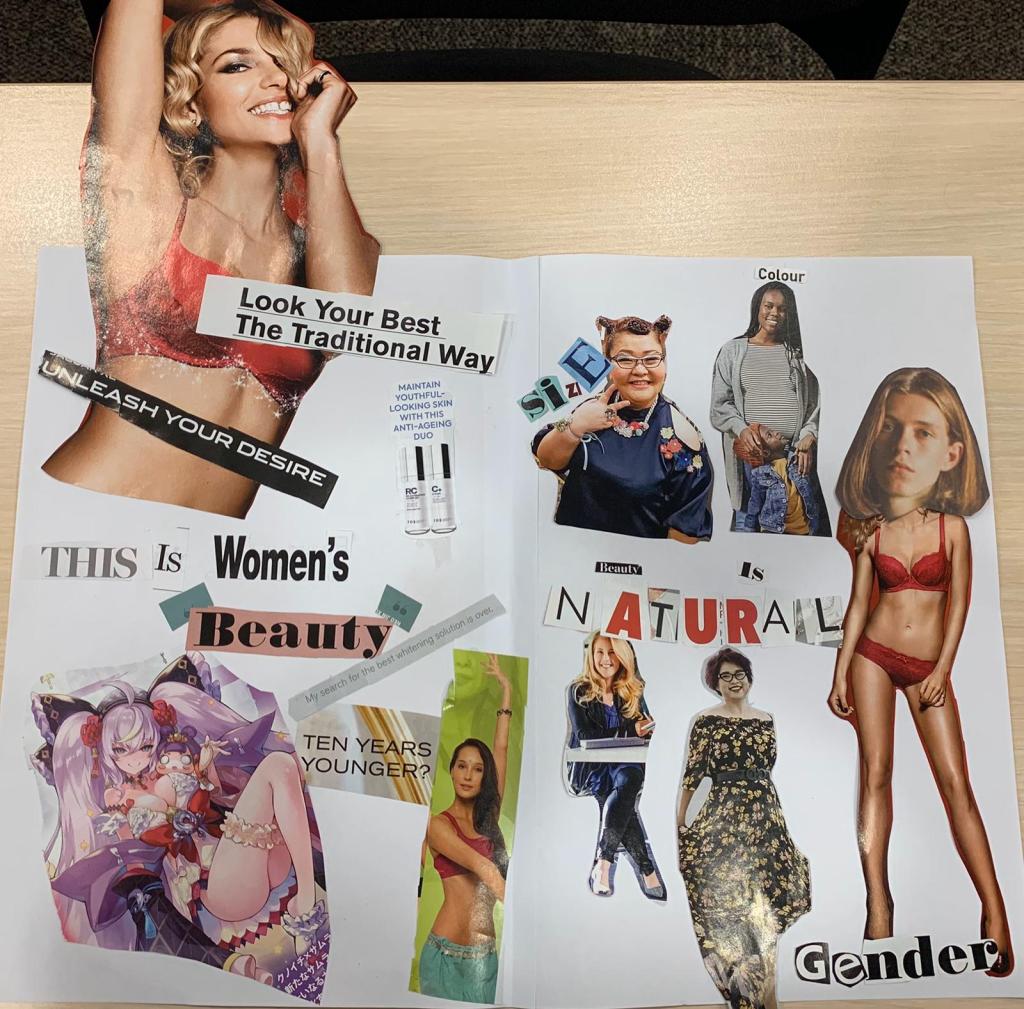
Recently, my groupmates and I discussed on what we think feminism is in 2020 and we decided that it is mandatory that we highlight the movement for positive body image. Since the time I can remember I have been seeing girls being obsessed with barbie and this obsession only reforms into serious body image issues when they grow up as they struggle to meet the ‘ideal’ body standards. 

These ‘ideal’ body standards are set by industries whom hire models –  who undergo plastic surgery, splash tons of make up and get their pictures edited- to advertise their products. It is saddening to see women starving themselves and developing anorexia while trying to attain the ‘slim’ figure.  

Feminism in recent years have made movements to advocate the idea of finding beauty in every body shape and boy you better believe that my group mates did the best we could in order to show our support to the natural beauty movement.

Everyone is good-looking mate

As the great Kendrick Lamar once said; “  Show me somethin’ natural like afro on Richard Pryor
Show me somethin’ natural like ass with some stretchmarks”

 Moving on to the next discussion at hand; Domestic Violence as discussed in a mediated public sphere

Domestic violence has been a major problem that has been plaguing families for a prolonged period of time, in fact I think it is safe to assume that even during the stone age there were unrecorded cases of domestic abuse. However, I would like to discuss an issue that has come to my attention recently, amidst the Johnny Depp & Amber Heard saga. For those who have not been following up with this incident because you could not be bothered about celebrities’ lifestyle, I urge you to take a little time out of your busy schedule to briefly go through the events. This is because I feel that there is an underlying problem within the system in how biased we tend to be when we look at parties involved in a domestic violent case. 

In March 2016, Amber Heard had filed for a divorce from her then-husband Johnny Depp. She had claimed that Johnny had verbally and physically abused her during the entirety of their 15 months of marriage. Whomever question the legitimacy of the abuse was labelled a misogynist.

In 2016, Vox suggested that any doubts about Heard’s story could only be the result of misogyny (“it doesn’t really matter how women act when they accuse men of hurting them. … We’ll find a way to call them liars no matter what they do”). (https://www.vox.com/2016/8/19/12555646/amber-heard-johnny-depp-domestic-abuse-divorce)

After the divorce settlement, Amber had become a sensation or rather a hero to the point where she was even elected as the ambassador on women’s rights at the American Civil Liberties Union(ACLU). 

Whereas as for Johnny Depp, his career took a plunge and he was under huge criticisms. His public image was tarnished and there were movements which urged Hollywood to stop casting him in future movies. Here are some headlines and links that were around during that period of time:

  • “Everyone But Hollywood Agrees Johnny Depp Shouldn’t Be In ‘Fantastic Beasts’” (HuffPost), 
  • “The ‘Fantastic Beasts 2’ Problem: Why Is Hollywood Giving Johnny Depp a Pass?” (The Daily Beast
  • “Why Is Johnny Depp Still Employed, You Ask?” (The Mary Sue).

In 2019 Johnny filed for a defamation lawsuit against Amber claiming that he had evidences; witness testimonies and more than 80 surveillance videos. Johnny so much so, went to release call recordings of the conversation he had with Amber before bringing her to court for trial. 

The part that concerns me the most in this saga is how public viewed each parties at a certain period of time. When Amber had claimed that she as abused there were numerous problems stacked against Johnny, however when Johnny had released evidences supporting the fact that he was indeed the victim in the abuse, there were cases that did not take him seriously for the sole reason that he was a MALE. Hell, Amber herself had told Johnny, “ Tell em, ‘I Johnny Depp…a man… I’m a victim too of domestic violence!’ and I, you know, it is a fair fight. And see how many people believe OR side with you!”.

Here is a video of the conversation between Johnny and Amber; 

 This very sentence showcases the chilling truth or rather a loophole where many female abusers hide comfortably. Now, I am not saying that everyone sees men as an impossible target in a domestic violence but perhaps it is time to acknowledge and be aware that there are cases where men do become the victim of an abuse even if the abuser is a female. Johnny Depp in my opinion was very lucky and smart to have recorded evidences, but what about cases involving average men who are not popular or rich enough to fight a case even if they are innocent? For now, the lesson from this story is not just about the obvious limitations of the #BelieveWomen mentality; it’s also the politics, and stereotypes, of domestic violence.

#JusticeForJohnnyDepp

Gender equality is an impossible feat, if we still resort to ancient stereotypes. With consideration to the biological differences – something that we can’t naturally alter- I firmly believe that there indeed is a mutual ground where men, women and transgender can share freedom, respect and love for one another without spreading hate. Sadly, we are miles away from that paradise.

That is what I am going to leave all my readers with! Have a splendid time ahead! Till the next time we meet, stay safe and stay hygienic! Adios fam!

BLOG POST #4

Does it matter who owns the media?

Welcome back to the fourth post on Siva’s thoughts! Today’s discussion will be about media! Specifically, on the importance of who owns the media! It has already been a well-established fact that media is an essential part in people’s life and this is evident as newspapers, Channels, television programs, radio stations and even media content found on the internet shapes our knowledge and perception of the world. So, in more ways than one, it is crucial to whom the ownership of the media goes to.

As such, let me briefly explain what a Government owned and Private owned media is (do not fret Miss Jesslyn, I will not change this into a descriptive essay! A Government owned media – as the name suggests – is when the government is in control of the media for mass communication, both financially and editorially. Whereas, a private owned media refers to any media outlet whose financing is provided by individuals or private groups. I personally think it is best to have access to both types of media, however since that is not a very derivative answer, I will need to choose a country to base my argument upon. So, let us take Singapore as an example. In Singapore’s case, I think it is best for the Government to control the media and I will explain why in this blogpost! 

Cons of Private owned media:

Private Owned Media have hired investigative journalists who would go through unethical means just to hunt for the next big ‘scoop’! These professionals literally turn into stalkers and invade personal spaces of an individual whom they would like to have a dig on! Such unconventional methods include; hacking, stalking, having your pictures taken without your permission and etc. (Yeah, those embarrassing texts you have sent is probably in the hands of a private media company, so in the event that you become a celebrity, there is a possibility that the rest of the world would get to see them! Sooo, goodbye privacy and Hello embarrassment!). One such good example was Hugh Grant’s ‘phone hacking incident’.  In April 2011, actor Hugh Grunt had an unexpected run into Paul McMullen- one of the ex-NoW(News of the world) hacks who had blown the whistle on Phone-hacking. On a later occasion, during a scheduled meet up between Grant and McMullen, the latter came to light with all the atrocities journalists do in-order to dig up some dirt on famous individuals. McMullen further also had an unusual defence of the practice: that phone-hacking was a price you had to pay for living in a free society (Grant, 2011).  

But can we really point our fingers at the private owned media and fault them from all these wrong doings? OF COURSE NOT! Private media thrives on the views & ratings of their content, since their income is dependent on Views and Ratings it is almost inevitable that they will jump on the most controversial headline which will be certain to get the attention of the consumers! On that note, let us take a step back and analyse who has the power to decide what content gets the most views and ratings? IT IS THE GENERAL PUBLIC; literally you and me, amigo!) We live in a world where people would rather learn about which celebrity got a butt implant than to learn about the adversities of people living in the different parts of their own society! Now, although it is understandable that gossips and rumours about celebrities whom we idolise are far more intriguing due to the brain being stimulated by curiosity, it is still partially our fault for falling prey to the temptations to view such articles as it only empowers the creators of the content. #Getagrippeople.

Pros of private owned media:

Like two sides to a coin, it is not all negatives with private owned media. There are certain benefits as well. The most crucial one of them all is the freedom of speech! There is no better gift to citizens than freedom to express their thoughts about their nation. Private media grants just that! You can literally trash talk Donald Trump and drag his name through the mud (I mean you might probably get a lawsuit from him personally, but hey, all that matters is that you can still express your thoughts freely!). A perfect example for this is Trevor Noah. Trevor Noah highlights the on-going issues of the world and creates awareness through his brilliant sense of comedy! On many occasions, Trevor has not only openly discussed about Trump, he has also questioned the president’s acts and sanity. These are the perks of having a private owned media.

Here is a video of  Trevor Noah’s Trump compilation.

Cons of a government owned media:

In countries were the media is owned by the government, it is a suicide attempt to bring forth criticism of the ruling party. In Singapore, there have been cases in the past where citizens got into trouble with the law for voicing out their thoughts and one such example is Amos Yee. In March 2015, after the passing of Minister Mentor Lee Kuan Yew, Amos Yee uploaded a video in which he made several remarks about the late minister and his legacy. Shortly after the release  of the video, he had numerous run in with the law. This goes to show if the government was to own the media, it is nearly impossible to state your opinions that questions the government without getting into trouble. 

Here is a video of Amos Yee on the death of LKY

Moreover, when the government controls the media, there are chances where the failings of the ruling party/nation will not be brought to light. In my opinion, one such example is racism. Racism has always been the disgrace of any particular country, yet I think it still exists in every corner of the world. Incidents of racism are usually documented by the private owned media (probably because of the controversy such topic creates) , whereas if the media is owned by the government these said incidents are rarely broadcasted as these failings will only cast the government in a negative light. In Singapore, the media -which is controlled by the government- always projects racial harmony. It show cases everyone being friendly with each other and highlights the Singapore is a well racially integrated country. Do I think that is the case? NOPE! Racism is going to exists whenever there are people.  Each race has their various believes and  differing lifestyles, so it is impossible for everyone to love thy neighbour. The only way I see that happening is when people are disciplined enough to understand each other’s differences and accept them… But how many of us in the society are going to that extent? 

Pros of a government owned media: Better for Singapore

I know I am going to sound contradictory, but I think despite the negatives I have stated about a government owned media, it is in the best interest of Singapore that it has a government owned media!  A government owned media is a cheaper alternative, thus, most if not all households in Singapore will have access to local media’s channels. Hence the reach in terms of audience is much higher. Since a government owned media acts as a mouthpiece for the government, it is easier for the government to convey all the official plans (changes in current law, schemes and policies) to the nation. 

Moreover, the government controls the content being screened. Since it is easy to impact children’s perception as they are readily influenced, it is pivotal to regulate the types of contents being screened on the media as there might be adolescents amongst the viewers. This is precisely why local channels censor graphical contents even if the coverage is about a homicide. 

LASTLY, in times of an epidemic or a crisis it is always best to let the government control the situation. A private owned media usually telecasts an incident without paying much thought to how the citizens will react to such news. During a crisis period the chances of people breaking out into a frenzy is almost certain. Everyone is on edge during these times and a message conveyed at a wrong time might just cause panic. Thus, it is best to let the government handle such times as they have a planned strategy.

For the above mentioned positive reasons, I think it is best that Singapore’s media is owned by the media despite the other drawbacks (which we will have to work on). Besides, in the age of New Media everything is very accessible. So does it really matter who owns the media in this century? MUAHAHAHAH! Ponder on this! Till the next time daisies! CIAO! 

Reference List:

(Grant, 2011)

Grant, H. (2011). The bugger, bugged. Retrieved 12 April 2011, from https://www.newstatesman.com/newspapers/2011/04/phone-yeah-cameron-murdoch

Blog Post #3

Guess who’s back, back again?! My post is back, don’t tell a friend! Hey there wonderful human minions, I hope you guys have been having an amazing time! I am back with a brand new blog post and in this post I will be discussing 1.) Uses and Gratifications theory and 2.) The Trevor Project – an example of a lobby group. So, without further ado let’s jump right into the discussion…

What is ‘Uses and Gratifications’ theory?

Uses and gratification theory builds off of a history of communication theories and research. Jay Blumler and Denis McQuail laid the primary groundwork in 1969 with their categorization of audience motivations for watching political programs during the time of the 1964 election in the United Kingdom. This eventually led them to develop Uses and Gratifications theory later on with their colleagues 

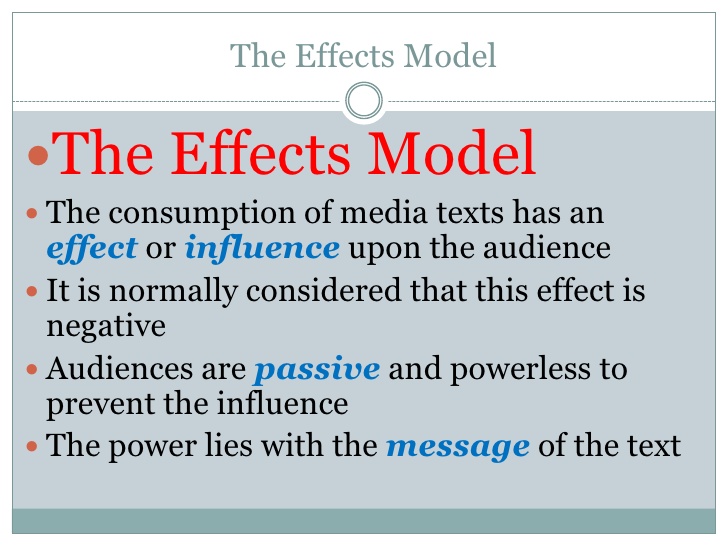
Uses and gratifications theory asserts that individuals seek their preferred choice of media in order to satisfy – or in other words, ‘gratify’- their certain needs and wants. This theory is fundamentally different from other ‘media effects’ studies because it states that an individual plays an active role as a consumer of media, which in turn suggest that individuals have power over their choice of media consumption, unlike, the other group of studies which places consumers of media in a passive position 

The outlines of the theory:

Now that we have established individuals consume media based on the needs they would like to fulfil and satisfy, let’s tread further to investigate what the common types of needs are. Reason/Need  for the use of media are classified and categorized into 5 different needs. 

  • Cognitive needs:

Although it is unusual, there are members in the audience that have the thirst to seek and acquire intellectual and academic knowledge, thus they resort to using the media to gather knowledge, information, facts, etc . 

  • Affective needs:

People resort to using various forms of media to satisfy all kinds of emotions, pleasure and moods. (Although, this does come as a surprise to me as I certainly had no idea that my classmates have emotions to satisfy. Lads, they are all walking robots….)

  • Personal Integrative needs:

This particular need is also known as the self-esteem need. Individuals use the media platforms to self-assure their status and sense of credibility in the society they are living in. I personally feel that, this particular need creates an unhealthy obsession with keeping up with the trend in order to gain acceptance from society. 

  • Social Integrative needs:

This classifies the need to socialize with family, friends and relations in society. In the age of technology, people would rather turn to social media platforms such as; Facebook, Instagram and Twitter etc to communicate than to have an outing. This can be explained by the ease technology provides. For example, it would be easier for me to catch up with a friend through text then to schedule a meet up and then spend hours trying to do, in essence, the same as the former goal.

Furthermore, it is not uncommon for individuals (since humans are such majestic social butterflies) to start watching a particular programme just to have a mutual topic to discuss about during a social interaction. For example, there was a period of time where the ‘Game of Thrones’ series was a common topic of discussion among peers.

  • Tension free needs:

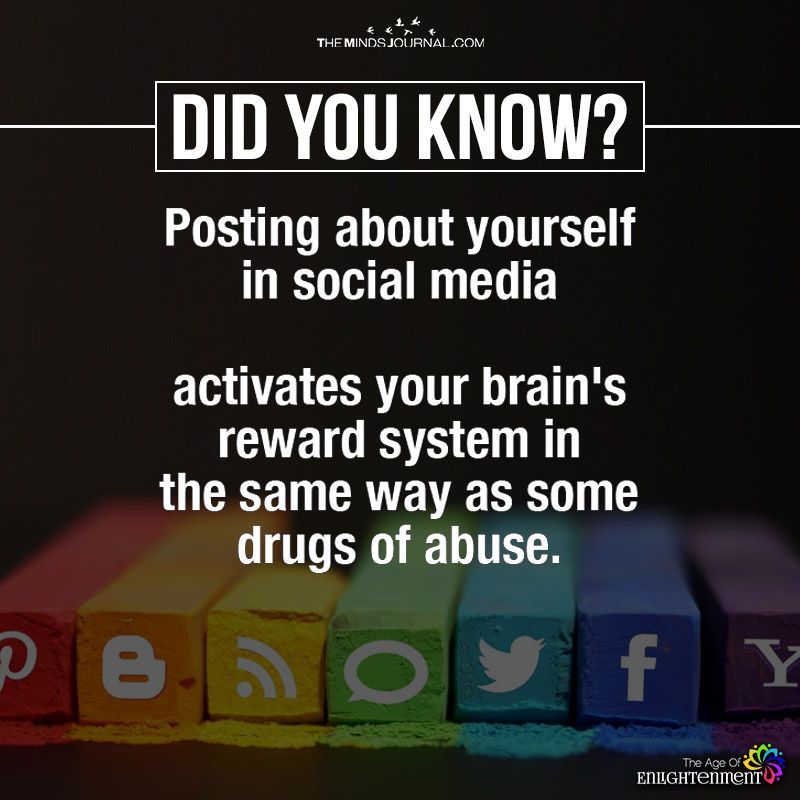
Media is perceived to be a drug in certain occasions as individuals use it as a mean to escape from the tension and stress filled reality they are living in; escapism.  

It is a known fact that life does become a bit of a rat race. Tension and stress always seems to be around at every curve in life. So, the cheapest and easiest way to escape all this, is to switch on the television and just indulge in the storyline of a movie which takes you faraway from reality. Thus, in my opinion, I think this is the most probable reason as to why I would resort in using the media

What does it aim to find?

In summary of all the details above, Uses and Gratifications research seeks to comprehend the purpose behind the choice of media an individual chooses to consume. 

Part 2: An example of a ‘Lobby’ Group

Moving onto our next segment, which is to cite an example of how ‘lobby’ groups make use of a particular readings of images to make an argument or stand. So, all aboard the Blog Post 3 train!  (I know it is lame, now stop cyber bullying me and focus on the actual content I am trying to convey to you muggles – non-believers of Siva’s magic.) 

Many of us are aware of the challenges the LGBTQ community faces, and although it troubles me to realize the numerous hardships this community encounters, I am relieved to a certain extend that there is help within reach for people in need. One such organization is “The Trevor Project”.

Trevor, the Oscar-winning film launched a national movement. When producer Randy Stone secured an airing on HBO with Ellen DeGeneres hosting, director/producer Peggy Rajski discovered there was no real place for young people like Trevor to turn when facing challenges similar to his. In 1998, Trevor Lifeline became the first national crisis intervention and suicide prevention lifeline for lesbian, gay, bisexual, transgender, queer & questioning youth

Here is an image that the project had shared in their campaign; “WORDS CAN KILL’

  • Denotations:
  1. Pills with the derogatory lingo etched onto them
  2. Pills spilled on a sink 
  • Connotations:  
  1. Trauma inflicted by such name calling needs medication to nullify the pain.
  2. Based on the pills being spilled sign one can assume that overdose might have been a possible outcome. Which in turn suggest that, such words do afflict pain to certain extend or worse still, torment the individual till they choose to end their life.
  3. As there is a presence of sink, perhaps the message being conveyed by this picture is to highlight the subtle hint that the individual suffers in silence. This is because, usually when people take their medication in the toilet, it is either their daily medications or medications they do not want anyone else to be aware of. Since we are aware that in certain societies the LGBTQ community is shunned away, the latter seems to be most probable.

Here are a few more illustrations from the campaign; ‘WORDS CAN KILL’.

Stand:

It does not take a genius to decode the message these pictures are conveying, but just in case some of you are sleep deprived, here goes the purpose of this campaign. It is to raise awareness of the adverse effects simple name callings contain and to make a stand for victims of such thoughtless acts carried out by immatures.

The End!

Thank you very much for you time ladies and gentlemen! 

Till the next impending blog post, have a wonderful time!

Blog Post #2

Introduction: What is a media effect model?

Hey there wonderful living things, welcome back to my second blog post! Now, before we dive in to discuss about the topic at hand – Media effects model (mostly what is wrong with it) and intriguing questions to ask about the role current media has in the shaping of mass opinion- I would like to extend my gratitude to everyone who has taken their time out to read my previous post. Okay… for those who did not read my previous post, in order to make things less awkward for you, I am going to move on to the main motive of this post. 

So, what is Media Effects Model all about? ‘Media effects’ explains through theories the influence of media over the attitude and perceptions of the viewers. Although most of the theories of ‘media effects’ model suggests that there is a negative impact on the audience member, many argue that the ‘media effects’ model is flawed fundamentally, thus the results are invalid.

Why media effects model is flawed?

So, what exactly is wrong with the Media Effects model? David Gauntlett discusses ten things that are wrong with the ‘effects model’ in an article from Approaches to Audience- A Reader. However, in this blog I am only going to discuss 3 of them as I feel that they are the most prominent flaws in the theory of Media Effects.

  • 2.1) Effects model see young children as the ‘helpless’ targets:

Firstly, effects model studies tend to view children as being easily influential and gullible. More often than not, when a research is being conducted on children,  researchers do not conduct a parallel study with the adults because it is considered a ‘common sense’ that they won’t act the same way and this highlights a very narrowminded approach. This problem is exposed by research which seeks to establish what children can and do understand about and from the mass media. The results of such projects have shown that children can talk intelligently and indeed cynically about the mass media, furthermore, children as young as seven are seen to make thoughtful, critical and media literate video productions themselves.

  • 2.2) The effects model is often based on artificial studies.

Secondly, it is a known fact that sociological studies of media effects are time consuming and expensive, thus careful studies are often outnumbered by simpler studies which are characterized by artificial elements. Such studies are usually conducted in a laboratory or in a ‘classroom’ setting by researchers who instigates the activity; thus, it is impossible to classify the results as ‘natural’ reaction. To support this argument studies have demonstrated that the presence, appearance and gender of an observer can radically affect children’s behaviour. 

Furthermore, the research subjects are shown abstracts and specially recorded videoclips – these contents lack narrative inherent meanings unlike the actual TV productions- thus, rendering the study invalid because, humans tend to rationalize the context in which an act is being demonstrated and just presenting them an out of context cue will just be perceived as a mere data. Researchers also do not consider the mental activity of the subjects at that particular time of test, so the results can be affected if the test subjects are not in the right state of mind.

  • 2.3) Media effects is biased against violence

Lastly, the media effects model is infamous for being biased against ‘violence’ shown on Tele. I very much feel that, violence/anger is an innate character of humans. After all, there always has been wars, murders and other types of violence; domestic violence. And all of these have predated any forms of media. So, blaming media for personal traits just simply symbolizes us pointing fingers at someone else to blame for our wrong doings. Perhaps, here is a question that might intrigue your thoughts on media… what if people who actually have anger issues tend to watch violent TV content? Which leads us to perceive that the former is not a result of the latter but instead it is the other way around. 

CONCLUSION

‘Oh my lord, we are finally reaching the end of this post’ is probably what that little inner voice is screaming in that exhausted brain of yours, but before I place my final full-stop of this post, I would like to dabble with a few questions. Media without doubt is a powerful platform that has been impacting its audience members. Now, the question is, can we really trust all that is shown on the media? We are without doubt influenced by details shown on the media that it shapes our very life, but we fail to see if the contents are reliable. For example the recent media has been blowing up about the CORONA VIRUS, but have we examined what the myths and facts are?  Here is a fact or two for you to ponder on, the common flu kills 60 times more people annually than Corona and only 2% of cases have reported deaths and most of these deaths were associated with weaker immune systems( e.g old age). Which makes you wonder, what if the contents shown on the media are just abstracts, and their purpose is solely to boost the views for that particular programme?  It is good to keep up with the daily happenings of the world, but do be mindful of what you are being fed. Thank you very much for your time ladies and gentlemen, have a wonderful time ahead! Ciao! Siva over and out! 

Blog Post 1

Introduction

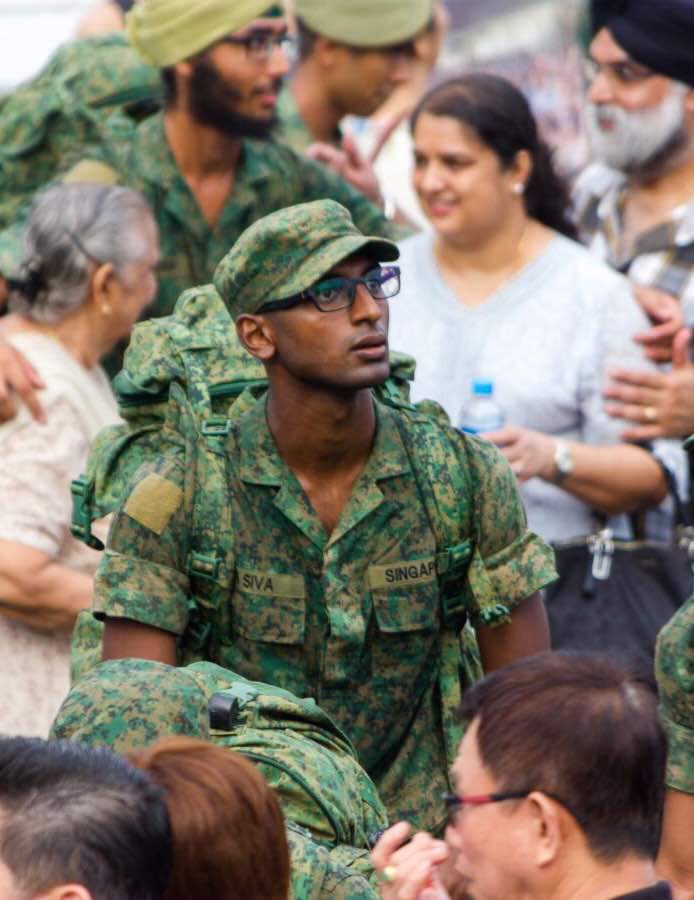
Hi there! A very warm welcome to all the curious souls that has wandered their way into my blog. This is my very first blog in my entire life, so pardon me if it is not up to your satisfaction! My name is Siva, well, my full name is Siva Varaprasath, but I doubt anyone has the time to call me by my full name, let alone learn to pronounce it. I am from Singapore (to those who are unaware of where it is and would like to take a wild guess, let me give you a hint… IT IS NOT IN CHINA). It is small island located in South-east Asia! A little about me, I was really mischievous during my adolescent years (mostly because of my ADHD and Hyperactivity) but as I grew up I channeled all those energy into various hobbies such as sports – football, badminton, Calisthenics and hide seek with my mother and her favorite cane when I got in trouble at school. Occasionally, I do write my own poems and listen to songs, afterall music is a form of medication. After 23 long years of living, I ended up enrolling in Psychology Degree Programme at SIMGE/UOW. 

Why Psychology?

Why psychology you might ask… Well, I always believed that a healthy mental health is the key to a happy life, but sadly many of us barely know much of it, or rather society has not given importance to it and thus, not many of us know how detrimental a poor mental health can be. The reason why I claim that not many of us understand the severity of mental health is because we live in a society that takes pity on physically ill patients but choose to shun away people struggling with mental illness such as depression when in fact, the latter often claims a higher number of lives. Thus, I chose to pursue psychology because I want to gain a better understanding of the cause and effect of mental illnesses. Since it is said that humans will experience some sort of mental illness at least once in their lifetime, gaining knowledge from this field might perhaps equip me with the essentials to accommodate someone struggling with poor mental health – be it family, friends, colleagues or strangers.

How BCM (Communication and Media Studies) can help me with my future endeavours?

First of, what is BCM? BCM110 (Introduction to Communication and Media) is a module taught in the first semester of year 1 in BSC Psychological Science (UOW) -also the module which made me make this blog.  The module covers the studies of media and communication practices, institutions and technologies (UOW, 2020). So, with that being said, how would this in turn help a Psychology student in the long run?  In the 21st century, media is an essential part of almost the entirety of human population so much so that it has become very integrated in our lives and the very thought of forgoing it can seem like an impossible task for many of us. Furthermore, media technologies are proliferating at the speed of light with new toys and gadgets on the market every day and since these technologies are introducing capabilities that are redefining the way we work, play and communicate (Rutledge, 2019), it is pivotal – not just for psychology majors but also in general- to gain the knowledge of the relationship between media/communication technologies and its implications in the behavior in professional and social settings. Hell, we do not even have to make it that complicated. Studying about the media can help us decipher the intend of the content shown, by stimulating critical thinking. Lastly, learning how to communicate effectively is mandatory when it comes to expressing your ideas during presentations or even in social settings. Human beings are a social species, which means that communication is an integral part of survival.  Thus, understanding the basics of effective communication will in turn be essential in the long run.

Conclusion

That’s all folks! I have came to the end of my first blog! Don’t you shed a tear lad, I will be back with a another 5 more!